







Among Japan's prefectural capitals, Aomori City receives the most snowfall in a year. According to observations by the Japan Meteorological Agency, the average annual snowfall from 1981 to 2010 was 669 cm, surpassing Sapporo in Hokkaido, which averaged 597 cm.
What kinds of snowfall characteristics can be seen at Aomori Airport, located in this heavy-snow region? Here, we look at the features of winter snowfall at Aomori Airport.
Topographic Factors and the Mechanism of Snowfall
For snow to fall, rising air is needed in addition to cold temperatures and water vapor. As air rises, the surrounding air pressure drops, causing the air to expand and its temperature to fall. This cools part of the water vapor, which condenses and freezes into snow crystals.
In Aomori City, rising air is generated where the northwesterly winter monsoon, blowing along the ridgeline of the Tsugaru Mountains, meets the southwesterly winds that flow around the Hakkoda Mountain Range. This terrain, enclosed by the Tsugaru Mountains and the Hakkoda Mountain Range, is one of the main reasons Aomori City receives such heavy snowfall.
Aomori Airport, meanwhile, is located on a hilly area about 10 km south-southwest of central Aomori City, at an elevation of roughly 200 m. About 20 km to the southeast rise the Hakkoda Mountain Range, including Mt. Odake at approximately 1,585 m. About 12 km to the northwest stands Mt. Bonshu, at approximately 468 m, and about 33 km to the west towers Mt. Iwaki, at approximately 1,626 m. On the northeast side of the airport there is a cliff, beyond which lies a plain. In addition, to the west of the airport runs a gorge carved by the Namioka River, which serves as a channel for westerly winds blowing in from the Sea of Japan.
In this way, the area around Aomori Airport is also a complex landscape of mountains and valleys, and the surrounding peaks have a major influence on lower-level airflow and the distribution of snowfall.
In particular, the westerly to northwesterly winter monsoon, which picks up moisture from the Sea of Japan, flows into the area around Aomori Airport while being shaped by mountains such as Mt. Iwaki. Because the airport lies on the leeward side of the mountains, both the number of snowfall days and the total snowfall tend to be somewhat lower than in the Tsugaru Plain. Even so, a considerable amount of snow falls at the airport during winter.
Snowfall Season and Seasonal Characteristics
The usual snowfall period at Aomori Airport lasts about six months, from late October through April. Snow falls on nearly every day from November through March, with snow depth peaking in January and February.
From December through February, temperatures are below freezing for most of the day. In addition, from late November to mid-March, road surface temperatures stay below freezing almost continuously. As a result, fallen snow melts slowly and snow cover tends to persist for long periods, so snow depth in winter can become quite deep.
Wind Direction, Snowfall Type, and Visibility During Snowfall
During snowfall, the wind direction is concentrated in the western half of the compass, with south-southwesterly to west-northwesterly winds being the most common. Most of the snowfall is showery snow (SHSN).
Relatively heavy snowfall tends to occur more often with winds from the west (west-southwest to west-northwest), and it is often accompanied by gusts. Stratiform snowfall (SN), which occurs with winds from the northeast quadrant, does happen, but its frequency is low.
Light flurries are rare at Aomori Airport; snowfall tends to be heavy. Visibility usually decreases during snowfall, and snowfall can continue for long periods.
Snow Removal System and High Operational Capability in Heavy Snow
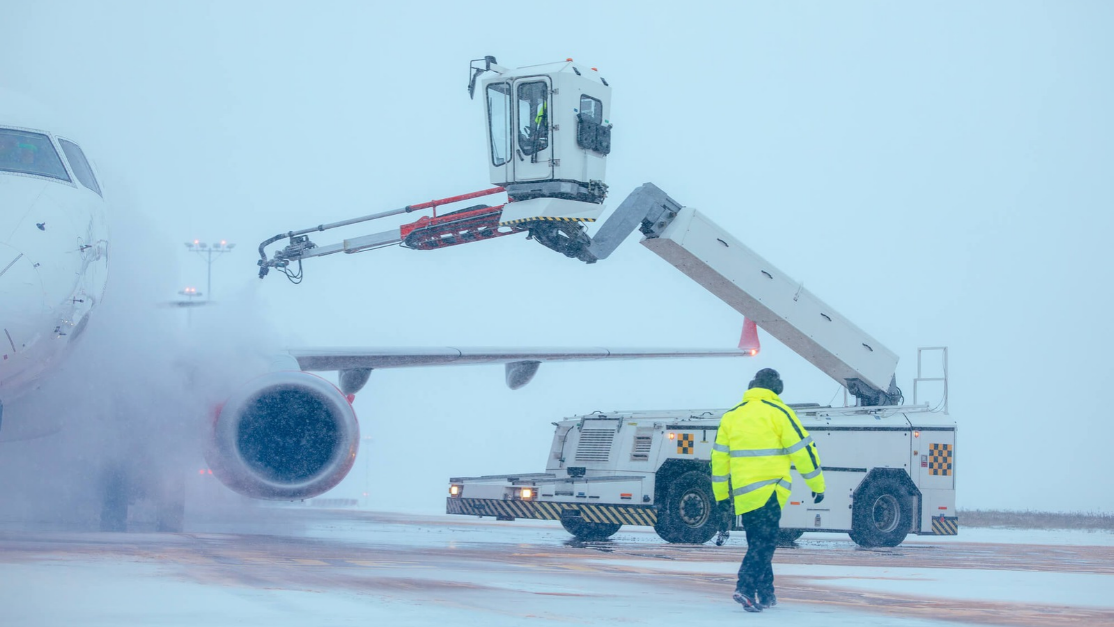
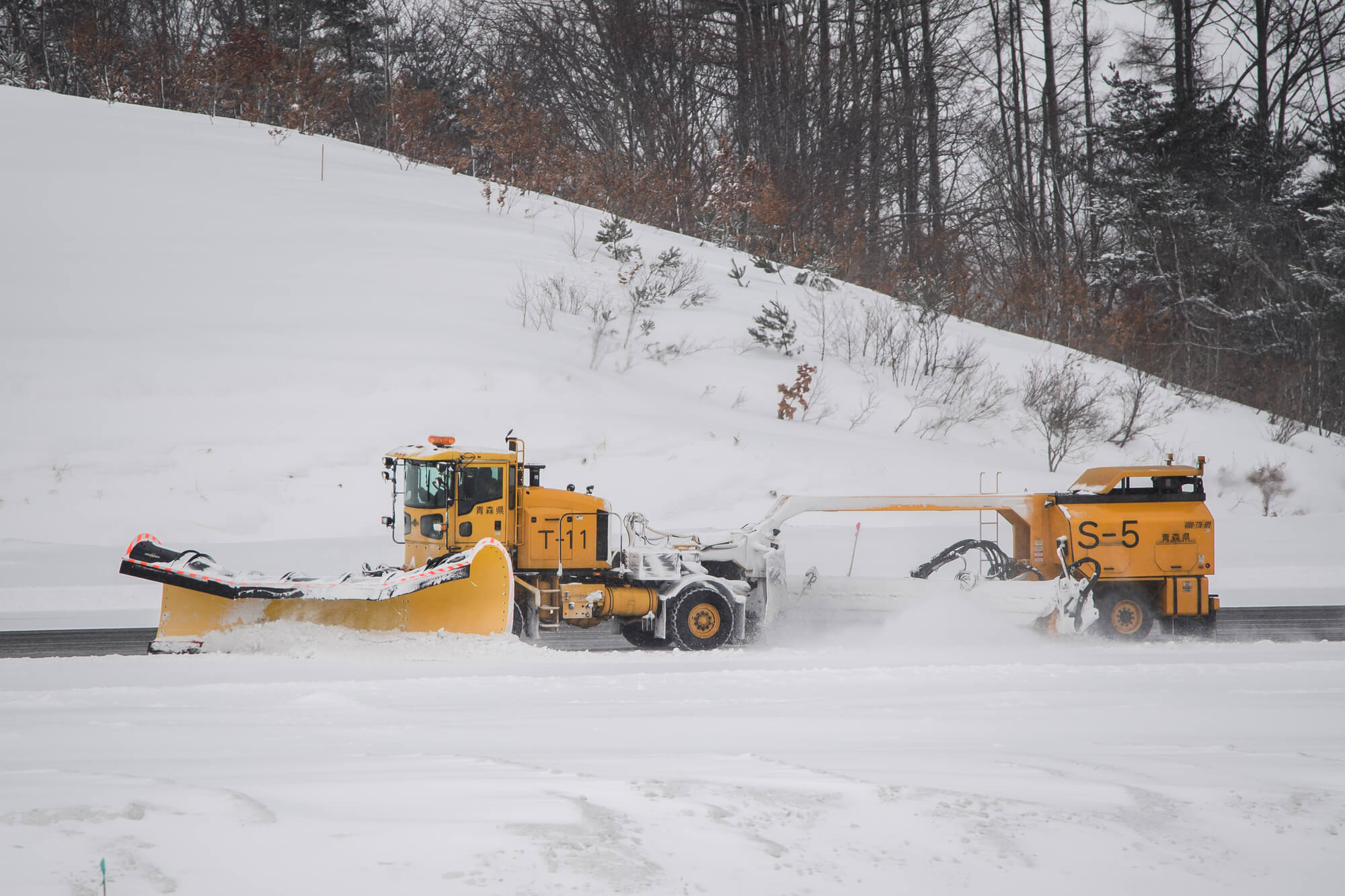
Despite the heavy snowfall, Aomori Airport has relatively few flight cancellations caused by snow or strong winds. This is supported by advanced snow removal technology and an efficient snow removal system that ensure the safe takeoff and landing of aircraft.
According to the Aomori Airport Management Office, the airport clears an extensive area of about 550,000 m² (roughly 12 Tokyo Domes), including the runways and taxiways required for aircraft takeoffs and landings. Using about 60 snow removal vehicles, this work is completed in just 40 minutes. That works out to clearing an area the size of one Tokyo Dome in about 3 minutes and 20 seconds.
This rapid and efficient snow removal system supports stable aircraft operations at Aomori Airport in a heavy-snow environment.
For detailed weather information at airports around the world, please see SkyAviators, our decision-support tool for aviation operators. Learn more about "SkyAviators"
Disclaimer
This article is provided for reference only. Specific flight operation support for individual flights is provided exclusively through our paid services for aviation operators. Weathernews Inc. assumes no responsibility for any operational decisions made on the basis of this article, or for any loss or damage arising from them.