









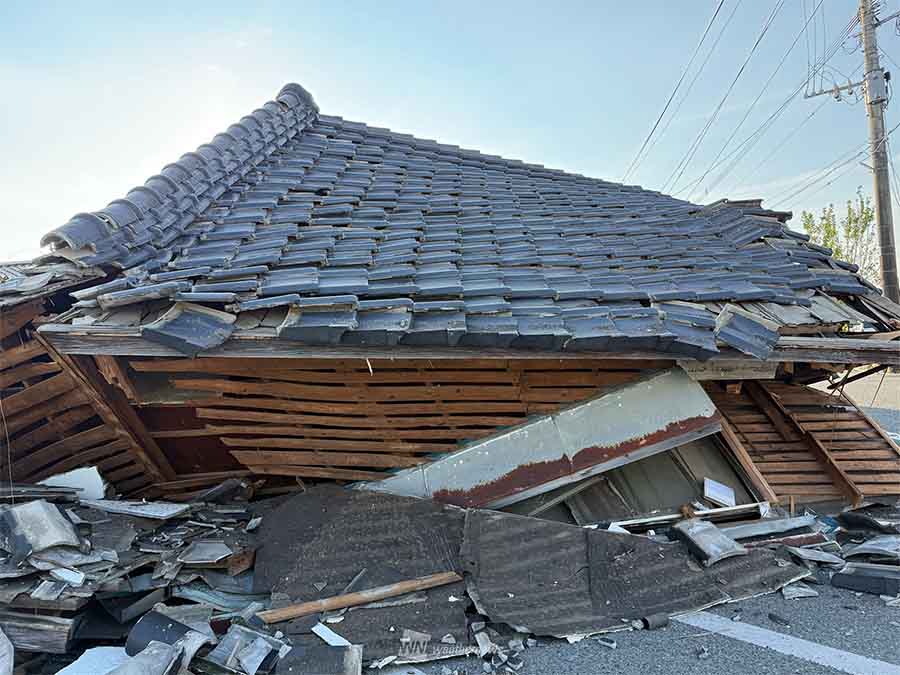
At approximately 4:27 PM on Tuesday, July 28, an earthquake measuring magnitude 7.1 struck Kumamoto Prefecture, registering a maximum seismic intensity of 7 on the Japan Meteorological Agency (JMA) scale. The JMA has officially named the event the “2026 Kumamoto Earthquake.” This is the first time a seismic intensity of 7 has been recorded in Japan since the 2024 Noto Peninsula Earthquake. Building collapses and other damage have been reported mainly across the Yatsushiro Plain, including in Yatsushiro City and Hikawa Town.
Japan’s first seismic intensity 7 since the Noto Peninsula Earthquake and Kumamoto’s first in 10 years
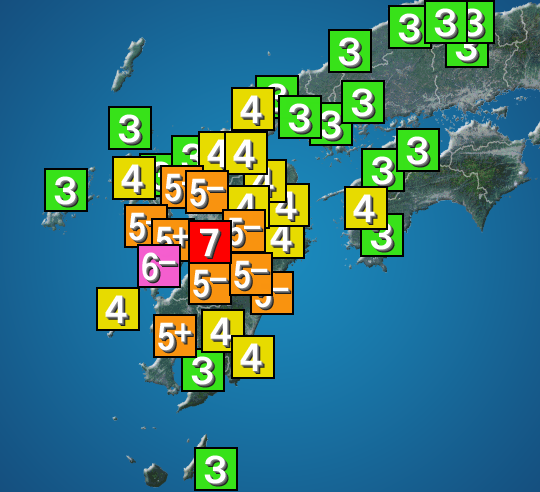
The earthquake registered a seismic intensity of 7 in Uki City and Hikawa Town in Kumamoto Prefecture. A seismic intensity of 6 Upper was recorded in Kumamoto City, Yatsushiro City, Uto City, Misato Town, and Mashiki Town. Shaking with a seismic intensity of 5 Lower or higher was also recorded across a wide area of Kyushu, while seismic intensity 1 shaking was observed as far away as Nagoya.
Seismic intensity 7 is the highest level on the JMA seismic intensity scale. This was the first time in two and a half years that seismic intensity 7 had been recorded in Japan, following the 2024 Noto Peninsula Earthquake. It was also the first such observation in Kumamoto Prefecture in 10 years, since the 2016 Kumamoto Earthquake.
Long-period ground motion class 4, the highest level on the JMA scale, was also observed in Yatsushiro City and Uki City. This was the first observation of long-period ground motion class 4 since the earthquake in eastern Shimane Prefecture on January 6 of this year, which registered a maximum seismic intensity of 5 Upper.
Widespread earthquake damage across the Yatsushiro Plain
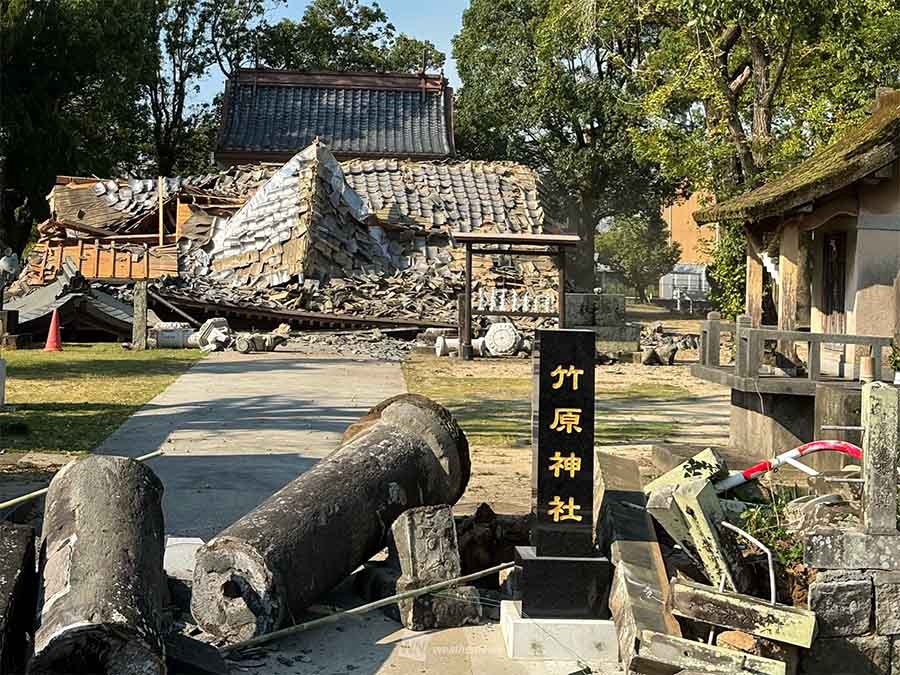
Photos and videos submitted by users of the Weathernews mobile app indicate that damage is particularly severe in Kumamoto Prefecture, especially across southern Kumamoto City and the Yatsushiro Plain.
The photo at the beginning of this article was taken in Hikawa Town, Yatsushiro District, and shows collapsed houses blocking a road. Photos from Yatsushiro City also appear to show a collapsed shrine worship hall and torii gate. Reports of collapsed buildings have also been received from northern Yatsushiro City, including the former Kagami Town area.
Possible activity along the Hinagu Fault
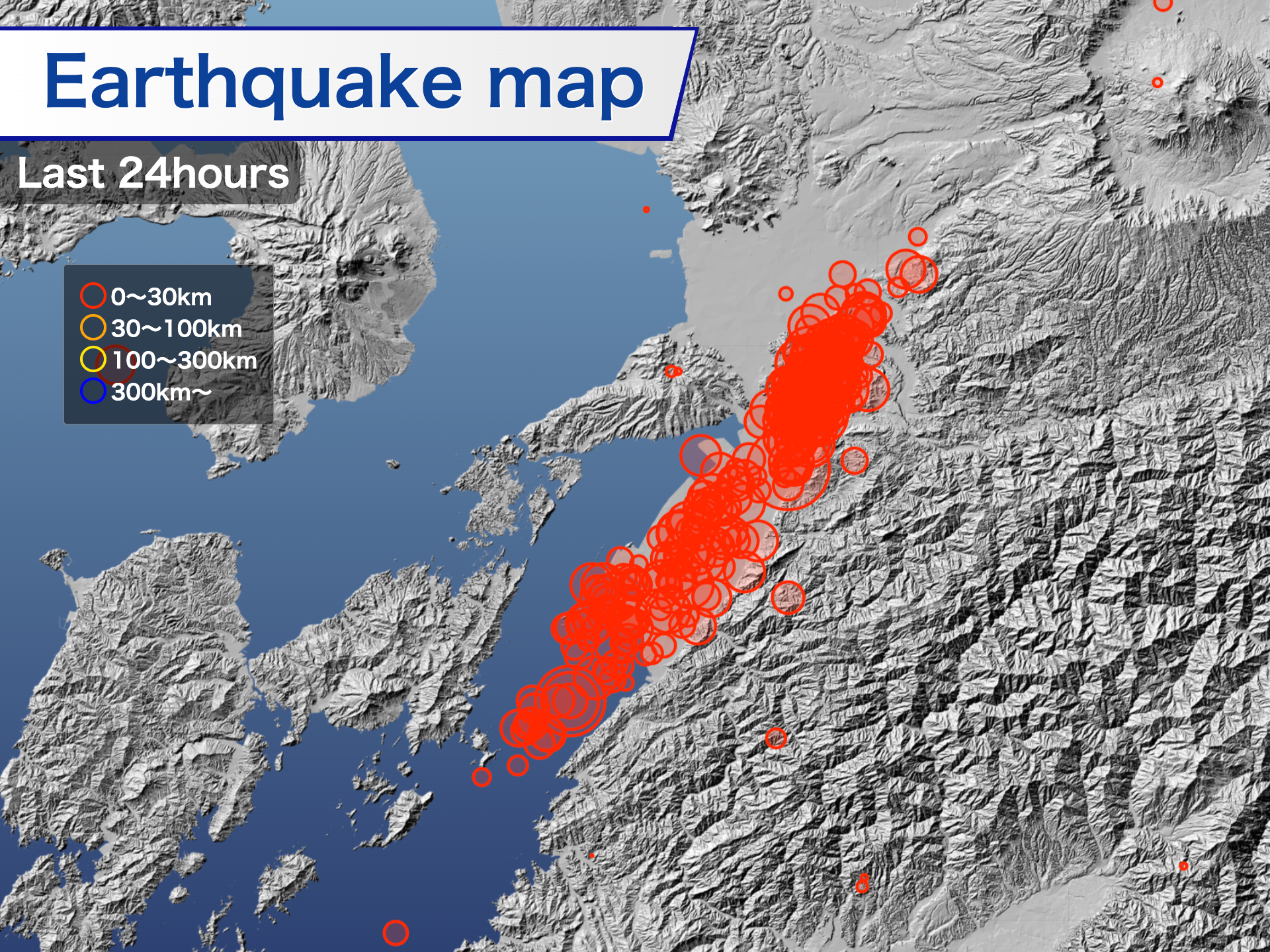
The earthquake’s focal mechanism has been analyzed as strike-slip faulting. Although the earthquake occurred within the area affected by the 2016 Kumamoto Earthquake sequence, its epicenter appears to have been near the Hinagu Fault, slightly southwest of the epicenters of the two earthquakes commonly referred to as the “foreshock” and “mainshock.”
The preliminary epicenter location and focal mechanism, together with the distribution of strong shaking shown by the estimated seismic intensity map, are considered consistent with movement along the Hinagu Fault.
The Japanese government’s Headquarters for Earthquake Research Promotion had estimated the probability of a magnitude 7.5-class earthquake occurring within 30 years along the Hinagu section in the northern part of the Hinagu Fault Zone at approximately 0–6%.
Since the magnitude 7.1 earthquake at 4:27 PM, frequent earthquakes have been observed along the Hinagu Fault. Seismic activity is currently concentrated in the area known as the Hinagu section, while activity in the area known as the Yatsushiro Sea section remains limited.
Close monitoring is necessary, including for possible activity along the Futagawa Fault Zone and the Yatsushiro Sea section of the Hinagu Fault Zone.
Elevated risk of further major earthquakes expected to continue
The earthquake was large, at magnitude 7.1, and had a shallow focal depth of 16 km. Earthquakes producing strong shaking are therefore expected to continue for some time. Three earthquakes with a maximum seismic intensity of 5 Lower have already occurred, and earthquakes registering seismic intensities of 3 or 4 are occurring frequently.
The initial violent shaking may have weakened the ground and damaged buildings, making them more susceptible to collapse. Avoid areas near slopes and old wooden buildings. Whenever possible, remain inside a structurally sound building and keep away from furniture, chests of drawers, and other objects that could fall or move.