









In 2026, France, Spain and Greece experienced a record-breaking heatwave. Weathernews Inc. (WNI) estimated the socio-economic impact of this heatwave by converting it into economic value under certain assumptions. As a result, the combined socio-economic impact across the three countries was estimated at approximately EUR 100.6 billion (around JPY 16.4 trillion).
Combined total: approximately EUR 100.6 billion
Scope of this estimate
This estimate covers not only the direct impact of high temperatures from the heatwave itself, but also associated impacts such as low rainfall and soil dryness, across France, Spain and Greece. It is a preliminary estimate based on weather data and public statistics under certain assumptions, and does not represent a confirmed damage figure from any national government or official authority.
Record heat strikes 3 countries
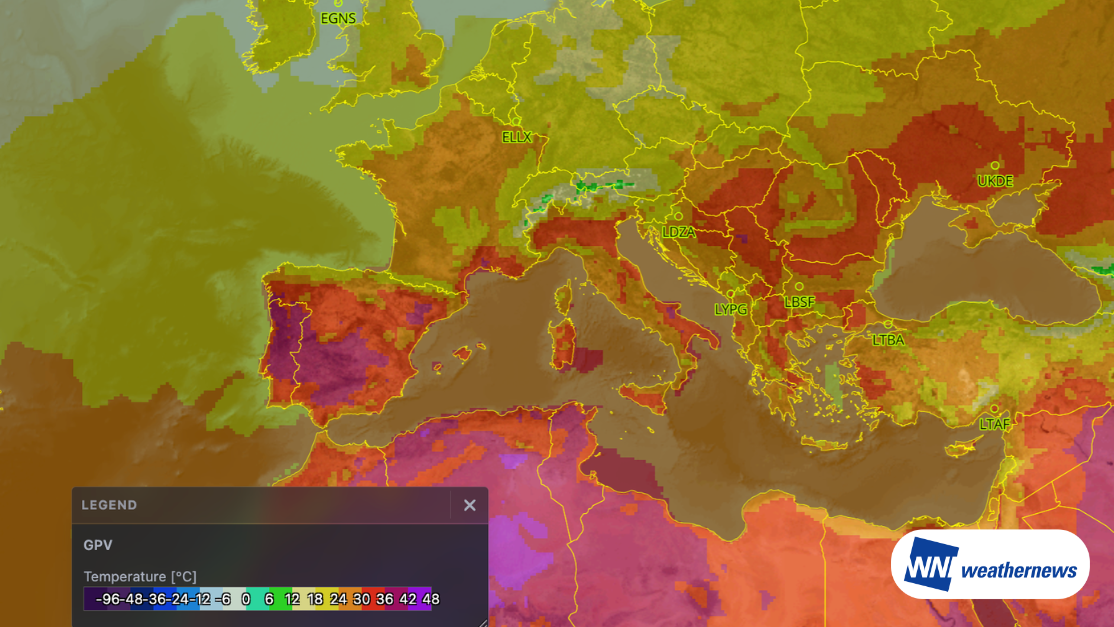
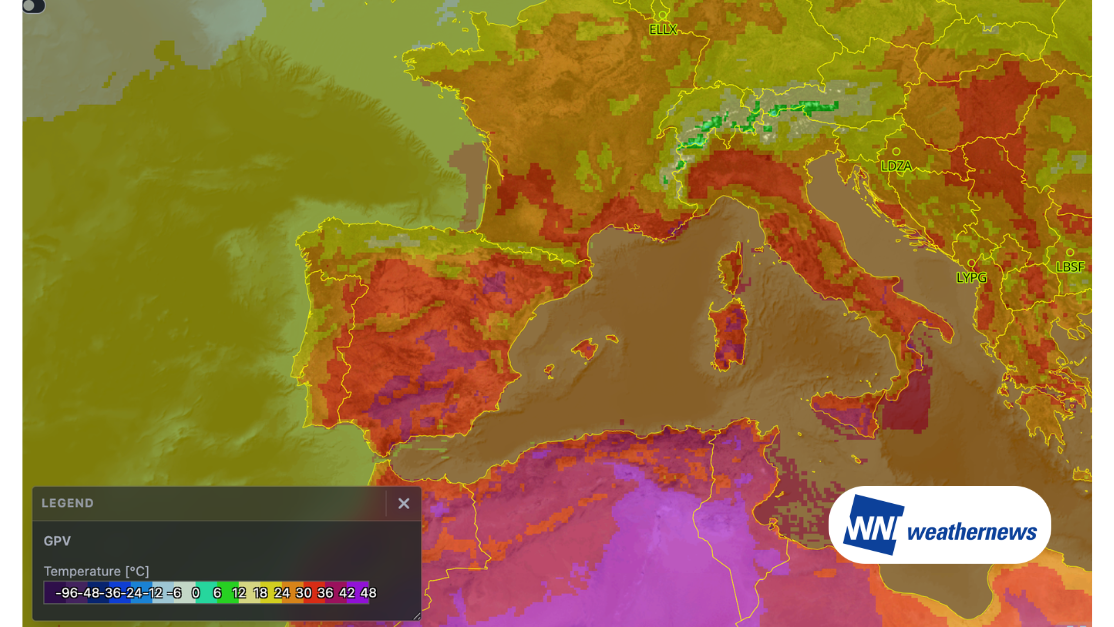
France: the national average temperature in July 2026 reached 24.9°C, the hottest month since records began in 1900, surpassing the previous record of 24.8°C in August 2003. Three heatwaves since mid-June (June 17–30: 14 days, July 4–19: 16 days, July 28–Aug 19: 23 days) brought the cumulative heatwave days to 53, far exceeding the 22 days of summer 2003. On August 13, temperatures in western cities including Nantes and Rennes reached 40–42°C, setting new monthly records.
Spain: AEMET (the Spanish national weather service) issued special heatwave warnings; inland areas reached highs of 44°C, with localized areas potentially exceeding 45°C. Seville recorded 40.5°C on August 11. July 2026 was 2.6°C above the national average, tying with July 2022 as the hottest month on record for Spain across all months. Rainfall was just 26% of normal, an exceptionally dry month. This year is notable for an early onset of heat, with heatwave conditions beginning in late May.
Greece: temperatures reached 43°C in parts of the country in late July; reports indicate Rhodes reached wildfire risk Category 3 (High) (as of August 2026). According to the Hellenic National Meteorological Service (EMY), the heatwave continued until at least July 22, and Crete recorded its 6th hottest July since 2010 (based on National Observatory of Athens data).
A shared heatwave, different economic risks by country
France, Spain and Greece differ greatly in population and economic scale, so simply comparing socio-economic impact figures to rank "which country suffered more" is not a meaningful exercise. What matters more is how differences in housing stock, insurance systems, agricultural structure and geography cause the impact to show up differently in each country. In France, impact tends to spread into public finances through mature infrastructure such as housing, insurance and electricity. In Spain, heavy reliance on agriculture and water resources leaves the economy directly exposed to heat and drought. In Greece, tourism, agriculture and wildfire risk tend to be concentrated in specific regions.
France: heat and drought spreading through housing, insurance and electricity
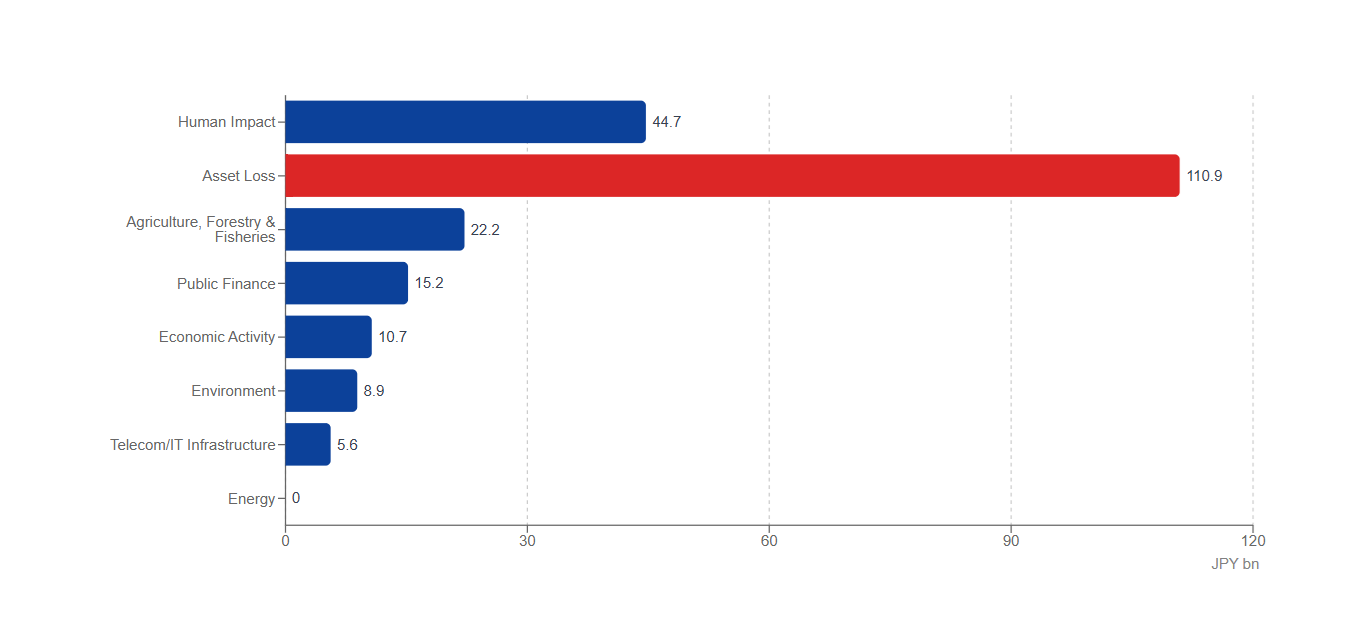
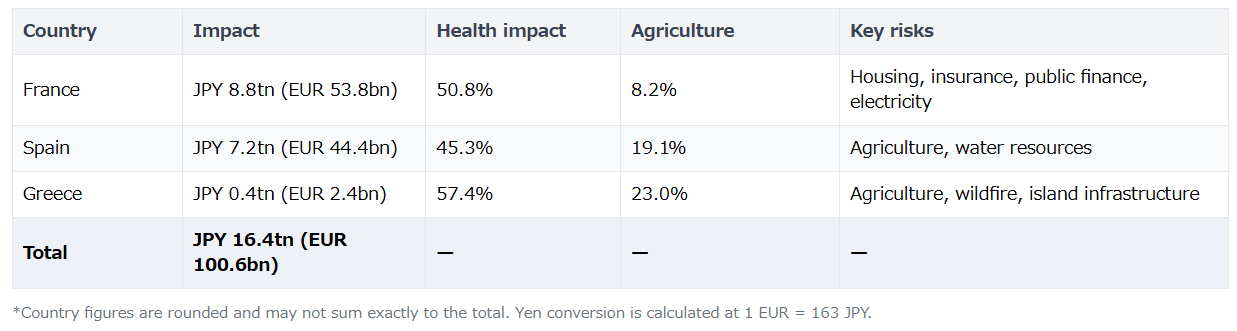
France's socio-economic impact (JPY 8.8 trillion / EUR 53.8 billion) is driven mainly by health & human impact (a 50.8% share), alongside asset loss and impact on public finances. A phenomenon known as "clay shrinkage," in which dry, clay-rich soil contracts, is destabilizing housing foundations and driving up cases of wall cracking and major repairs. This rise in housing damage could also feed through to insurance payouts and disaster-response costs — France's public finance share, at 14.7%, is the highest of the three countries. Power supply is another area to watch, as rising river water temperatures and lower water levels can affect power plant operations. With cumulative heatwave days reaching 53 in 2026 — far exceeding the 22 days of the record-setting summer of 2003 — the impact of heat and drought in France is spreading across multiple sectors through housing, insurance and electricity infrastructure.
Spain: agricultural risk from combined heat and water shortage
In Spain, the share of damage to agriculture, forestry & fisheries is 19.1%, significantly higher than France's 8.2%. This estimate reflects the strain on water resources and impact on irrigation/farm work from high heat and low rainfall. This estimate assumes reduced yield and quality for olives, grapes, grains and other crops due to heat and drought, but as of August 21, harvest and damage statistics for some items were not yet finalized, so figures may change as official statistics are released.
Greece: tourism, agriculture and wildfire risk concentrated in specific areas
Greece's socio-economic impact (approx. EUR 2.4bn) is the smallest of the 3 countries, but its agriculture, forestry & fisheries share, at 23.0%, is the highest. Rather than interpreting the smaller absolute figure as "less damage," attention should also be paid to specific sectors and regions such as tourism, agriculture and wildfires. Greece's many islands mean water and energy infrastructure impact is also an important consideration.
Health & human impact is the largest cost category in all three countries
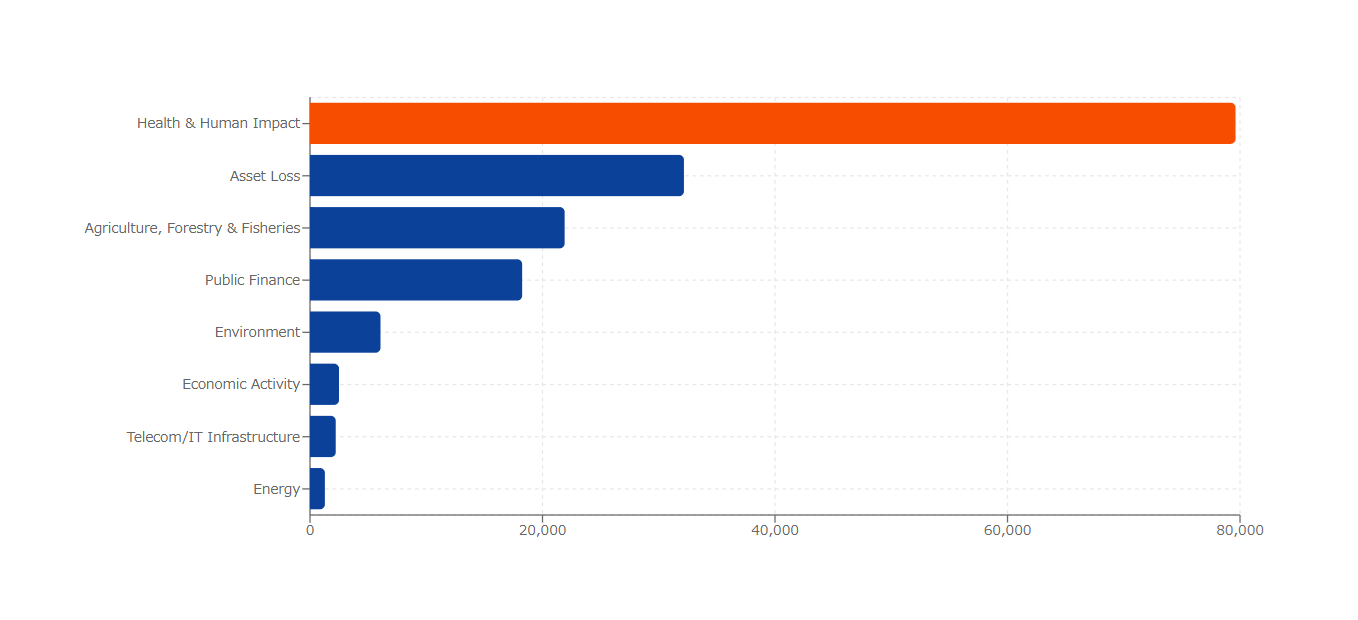
In all three countries, health & human impact — covering death, illness, medical costs and reduced labor capacity — is the single largest cost category: 50.8% in France, 45.3% in Spain and 57.4% in Greece. This is calculated separately from business shutdowns and lost sales, which fall under economic activity (JPY 249.4 billion combined across the three countries). The health & human impact figure includes an economic valuation of heatstroke-related mortality risk, calculated using the Value of Statistical Life (VSL) method. This is a modeled valuation, not an amount actually spent by businesses, households or governments.
How weather information can support each country's response
Weather information can support earlier decision-making in ways suited to each country's situation. In France, it can inform power supply and demand management and power-plant operating decisions, as well as heatstroke prevention for elderly residents and adjustments to outdoor working hours. In Spain, it can support irrigation and water-management decisions and help growers adjust farm-work timing and harvest scheduling. In Greece, it can feed into wildfire alerts, the management of outdoor activity at tourist sites, and water and electricity demand planning. Used in this way, weather information can contribute to earlier response and reduced damage from future heatwaves.
Basis of calculation and estimation method
This estimate was calculated using an economic value assessment model developed by Weathernews, drawing on weather observation data, population statistics and the Value of Statistical Life (VSL) for each country. Health & human impact was estimated from population, excess mortality rate and VSL. Asset, agricultural and energy damages were calculated by combining actual weather conditions (temperature, precipitation, etc.) for each country with economic indicators.
Sources
Weather observation data: Météo-France, AEMET (Spain), EMY (Greece)
Wildfire/environment-related statistics: EFFIS (European Forest Fire Information System / Copernicus)
Agricultural statistics: Eurostat, INSEE (France)
Health impact data: Santé publique France
Value of Statistical Life (VSL) reference: OECD
Country weather/damage status: Weathernews independent analysis, various media reports (as of August 2026)
*This estimate reflects Weathernews Inc. (WNI)'s own independent analysis. It is not a confirmed damage figure from any national government or official authority. Preliminary report (as of August 27, 2026). Figures may change as official damage data becomes available.