











Weathernews publishes its proprietary forecasts each year for the blooming and full bloom timing of cherry blossoms (Somei Yoshino) across Japan as a press release. This cherry blossom forecast is one of the most widely recognized seasonal forecasts in Japan.
Cherry Blossoms and Airline Operations
During the 2025 season, at the request of an overseas airline’s operations team, this cherry blossom forecast was shared as an English report. The forecast was praised for its accuracy, and it also generated strong interest as content supporting inbound travel promotion. Similar requests have already been received for the 2026 season. Here, we share one example of how weather forecasting can deliver value not only to operational decision-making but to the broader airline business.
2026 Bloom Forecast Overview
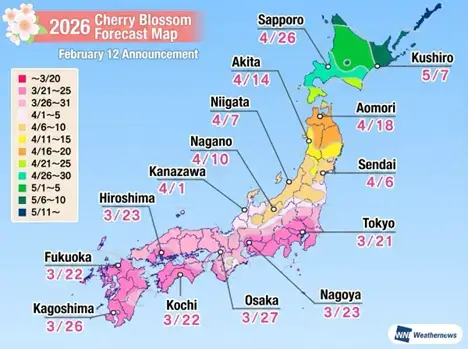
On February 12, Weathernews announced its Third Cherry Blossom Bloom Forecast for 2026.
The blooming of Somei Yoshino is expected to begin in Tokyo on March 21, with Fukuoka, Kochi, and Yokohama expected to follow on March 22. From late March through early April, blooming is expected to progress across many areas of western and eastern Japan.
What the Cherry Blossom Forecast Means for Operations Teams
The cherry blossom season is a period when passenger demand on Japan routes rises sharply. For overseas airline operations teams, early visibility of blooming timing directly supports the following practical decisions
・Anticipating demand peaks The timing of blooming and full bloom tends to closely align with peak inbound travel demand. Early awareness of the forecast provides greater planning lead time for seat supply and aircraft allocation.
・Assessing regional route demand Beyond Tokyo and Osaka, cherry blossoms in Hokkaido and the Tohoku region reach their peak from late April to early May. The forecast serves as an important input for decisions on extra flights and charter services to regional airports.
・Alignment with marketing teams When operations teams share cherry blossom forecasts early, promotional campaigns by marketing teams can be synchronized with operational planning. In the 2025 season, this coordination contributed significantly to driving passenger demand.